
What epoxy lining actually is
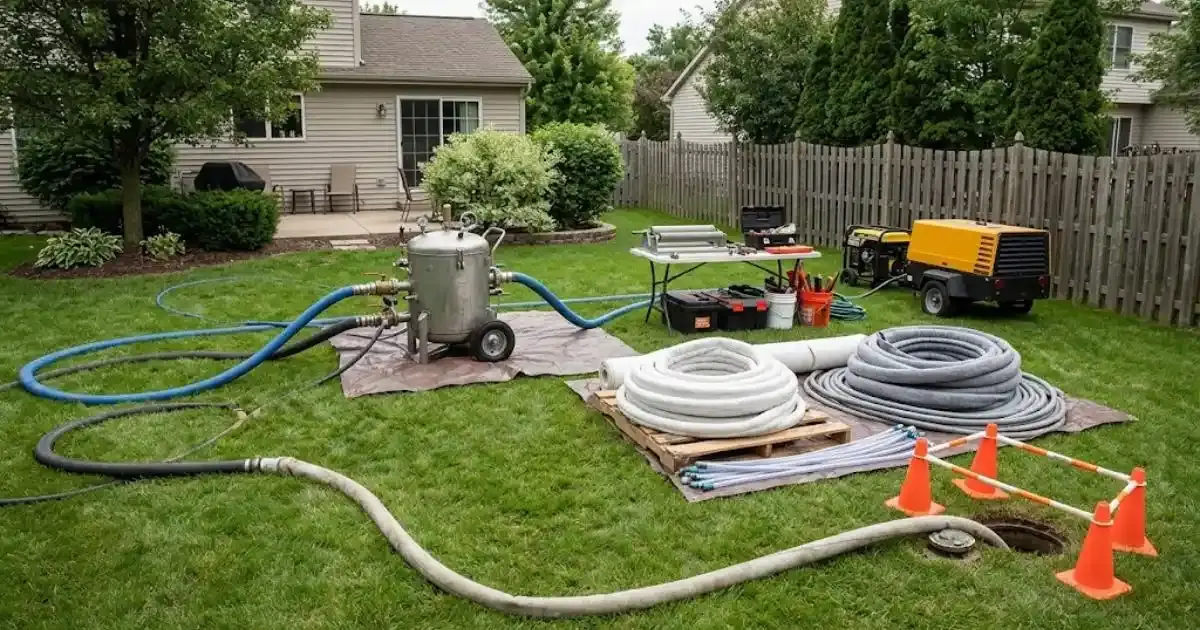
Epoxy lining, sometimes called pipe coating or relining, forms a thin resin layer on the inside wall of an existing pipe. The crew cleans the pipe, pushes a resin-soaked liner or pumps resin through it, then lets it cure into a hard, smooth sleeve. The old pipe stays in place and acts as the outer shell.
The appeal is clear. You skip most of the demolition, which matters when the pipe runs under a finished floor, a driveway or a tiled kitchen. The trade is that the lining depends on the old pipe being sound enough to hold it.
Lining versus replacement at a glance
Neither method wins every time. The pipe condition decides.
Epoxy lining
- Needs only small access points, so walls, floors and landscaping stay mostly untouched.
- Best for pipes with pinholes, rough interior scale or small cracks.
- Cannot fix a collapsed, crushed or badly offset pipe.
Replacement
- Opens the wall, slab or yard, so repair and finish work follow.
- Works on any damaged pipe, including collapsed and misaligned sections.
- Gives you new pipe from end to end, with a known material and fittings.
Not sure lining is even an option?
Call the 24/7 line to book a camera inspection and get a clear price before work starts.
Which pipes are good candidates
A pipe that is mostly intact but worn on the inside is the classic candidate. Think of old cast iron drain pipe with heavy scale, or older metal supply lines with pinhole leaks that keep reappearing. A smooth lining can also restore flow where rough buildup narrowed the bore.
A camera inspection tells us whether the pipe is round, aligned and free of large gaps. We also check how many bends, connections and diameter changes are on the run, because every one of them makes lining harder to do well.
Candidate or not: what the camera shows
These findings usually point one way or the other.
| Camera finding | Lining outlook | Usual next step |
|---|---|---|
| Light scale and small pinholes | Good candidate | Clean the pipe, then line it |
| Hairline cracks, no movement | Often a candidate | Line after cleaning and drying |
| Offset joint or belly holding water | Poor candidate | Spot repair or replace the section |
| Collapsed or crushed pipe | Not a candidate | Dig and replace |
| Heavy root intrusion at joints | Depends on the damage | Clear roots, re-inspect, then decide |
How a lining job proceeds
The order of work matters more than the product name on the box.
- 1
Inspect with a camera
Run a camera through the line to confirm size, material and the location of every defect.
- 2
Clean the pipe wall
Remove scale, grease and roots with a cable or high-pressure water. Resin will not bond to a dirty surface.
- 3
Dry and prepare
Remove standing water and dry the pipe, since moisture weakens the bond.
- 4
Apply the liner
Insert the resin-soaked liner or coat the pipe, then press it against the wall.
- 5
Cure and verify
Let the resin harden for the time the manufacturer lists, then run the camera again to check the finished surface.
Curing time and downtime
Curing is the step homeowners underestimate. Depending on the product and conditions, the resin needs hours to harden, and the line cannot carry water in the meantime. That can mean no toilet, no sink and no washing machine on that line until the crew signs off.
Ask for the plan before the day starts. A responsible crew tells you which fixtures are out of service, for how long, and what happens if the cure takes longer than expected.
Where lining falls short
Lining will not straighten a bent pipe, lift a sagging section or reconnect a pipe that has separated. It also narrows the pipe slightly, so a line that was already tight on capacity may flow no better afterward. A clog that keeps returning because of a belly in the line needs a different fix.
We do not recommend lining just because it avoids digging. When the camera shows a collapsed section, the honest answer is replacement. Our sewer line repair page explains spot repair and full replacement, and our water line repair page covers the supply side.
Coconut Creek note: check the contractor before you sign
Lining and replacement both change a pipe that is buried or sealed in a wall, so the person doing the work matters. The City of Coconut Creek advises hiring licensed, insured contractors and verifying them with the Florida Department of Business and Professional Regulation (DBPR).
DBPR runs a Verify a Licensee search at myfloridalicense.com. Plumbing contractor license codes on that site begin with CF or RF, and you can look up any contractor before work starts. Ask the Coconut Creek Building Department if your project needs a permit, since the answer depends on the scope of the work.
Source: City of Coconut Creek Building Department page and Florida DBPR license lookup.
Questions to ask any lining contractor
These keep the conversation concrete.
- Can I see the camera footage of the whole run, before and after?
- How many bends and diameter changes are on the pipe, and how do they affect the lining?
- What fixtures are out of service during curing, and for how long?
- What happens if you find a collapsed section once the cleaning is done?
- Is the work permitted, and is the company licensed and insured?
Neighbors who ask us about aging pipes
Homeowners in Margate and Deerfield Beach often ask whether older pipes can be saved. The honest answer comes from the footage, not the age of the house, so we start with the camera on every property.
Epoxy pipe lining questions
A properly installed lining is designed for long service, but the result depends on the pipe underneath and the quality of the prep. We do not promise a lifespan. Ask for the manufacturer rating and the camera proof of the finished surface.
No. Collapsed, crushed or badly offset pipe cannot be lined, and pipes with many sharp bends are harder. A camera inspection tells us before any resin is mixed.
Sometimes. It can avoid breaking the floor when the pipe is sound enough. A pipe with a leak under the slab may also need leak detection first, which we cover on our leak detection page.
It depends on the product, the pipe size and the temperature. Expect hours, not minutes, and plan for the fixtures on that line to stay out of use until the crew confirms the cure.
It depends on access and pipe length. Lining can save on demolition and restoration, while replacement may cost less on a short, easy run. We give a clear price before work starts for either method.
Use the Verify a Licensee search on the Florida DBPR site, myfloridalicense.com. The City of Coconut Creek advises checking licensed and insured status before hiring, and our crews are licensed and insured.