
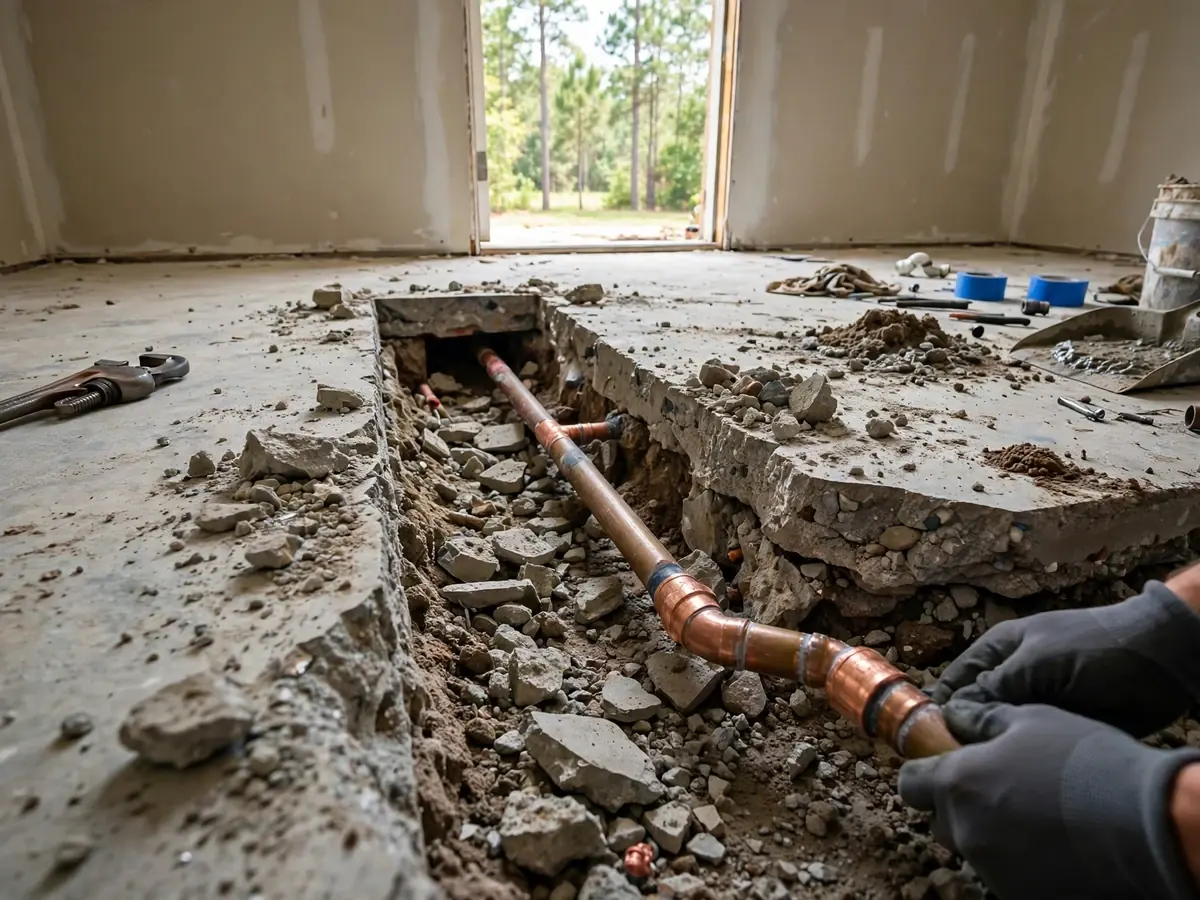
Emergency slab leak repair in Coconut Creek: what is happening under your floor
A slab leak happens when a pressurized water line beneath or within a concrete slab cracks, corrodes or loosens at a joint. For a home built on a slab in Coconut Creek, FL, that means water is escaping where you cannot see it, and emergency slab leak repair is the right call once the floor turns warm, wet or soft.
Our line answers 24/7, and we dispatch slab leak calls overnight and on weekends. Same-day visits are available when the schedule allows, so describe what you notice and we will line one up.
When a slab leak becomes an emergency
A leak under concrete runs around the clock, and water can lift flooring and soak the base of walls within a day. Do these four things while you wait for us.
Close the main shutoff
Turn the main valve at the house or the meter box. If the meter stops spinning after you close it, the leak is on the house side.
Stop the hot water if the floor is warm
A hot spot in the floor can mean a hot line is leaking. Turn off the water heater at its switch or breaker so it does not keep refilling.
Keep power away from wet floors
Do not step into standing water near outlets or appliances. If the breaker panel is dry and easy to reach, switch off the circuits for wet rooms.
Lift and photograph
Pick up rugs, boxes and electronics, and take dated photos of damp flooring, baseboards and the meter for your insurer.
If the water is spraying from an exposed line rather than rising from the floor, see our burst pipe repair page for that situation.
Signs of a slab leak, the way homeowners notice them
Slab leaks rarely announce themselves with a puddle. The first clue is usually something small, so here is what to watch for.
A warm spot on the floor
One patch of tile or slab feels warmer than the rest, often along the path of a hot water line.
Water coming up under floorboards
Laminate or wood planks cup, lift or feel damp, and baseboards swell at the bottom.
The meter runs with everything off
No fixture is open, yet the dial or low-flow triangle keeps turning.
A sudden jump in the bill
Usage climbs month over month with no change in how many people live in the house.
The sound of running water
A faint hiss or trickle under the floor at night when the house is quiet.
Cracks or damp grout
New hairline cracks in tile, or grout that stays wet in one area, can trace a leak below.
Warm floor, wet flooring or a running meter: what each one points to
Each symptom narrows the search differently. A warm spot suggests a leaking hot line, since hot water heats the concrete around it. Wet flooring with a cold floor often means a cold supply line or a drain line, and a meter that runs by itself says the leak is pressurized and somewhere past the meter.
A drain line leak behaves differently from a supply leak. Drain leaks show up as damp spots after you run a shower or the washer, and the meter stays still. For those we use a camera, so see our sewer camera inspection page.
How we confirm a slab leak before anything is cut
Opening a slab is the expensive part of the job, so the work starts with proof. We do not break concrete on a guess.
- 1
Isolate the system
We close the main, watch the meter and pressure-test the lines to confirm a leak exists and whether it is hot or cold.
- 2
Listen along the floor
Acoustic ground microphones pick up the hiss of escaping water. The sound is loudest above the leak.
- 3
Scan for heat and moisture
A thermal camera and moisture meter show warm or wet areas, which we match to the audio results.
- 4
Mark and explain
The spot is marked on the floor with the likely depth and cause, and you hear the repair options before any work.
Three ways to fix a slab leak
There is no single right answer. The best choice depends on where the leak is, how old the line is and how many leaks it may have next.
Spot repair through the slab
- Cut a small opening directly over the leak and replace the damaged section.
- Works best for one leak on a line in good shape.
- Involves breaking and patching concrete and flooring.
- Cannot prevent a second leak elsewhere on the same line.
Reroute or repipe the line
- Run a new line through the attic, walls or ceiling and abandon the leaking section.
- Makes sense when a line has leaked more than once or the pipe is worn.
- Leaves the slab intact and avoids opening floors in several rooms.
- Costs more up front, so see our repiping page for the full-house version.
Why older Coconut Creek homes deserve a closer look
City planning documents describe South Creek as more than 50 years old and Wynmoor, formerly Rossmoor, as about 40 years old as of 2019. Homes that old can have worn copper and fittings, so a slab leak may be one of several weak spots rather than a one-time event.
That is why we pressure-test the whole supply system after a repair. If the line is likely to fail again, rerouting it now saves you from opening the floor a second time.
Which utility serves your meter also matters when you call about a bill. The City of Coconut Creek utility serves homes north of Coconut Creek Parkway and the City of Margate utility serves the area south of it, so contact the right one about usage while we handle the leak on your side. If you live closer to the border, our Margate page covers the neighboring service area.
Storm season and slab leaks
The Atlantic hurricane season runs from June 1 to November 30. Heavy rain saturates the soil around a slab, and a water line that shifts or a joint that loosens can start leaking soon after a storm.
After a major storm, check the meter with all fixtures off, and look for new damp spots on the floor. Catching a leak early keeps the damage in one room instead of three.
What affects the cost of a slab leak repair
Slab leak work is priced by the access it needs, so the number changes from house to house. These are the factors that move it.
Leak location
A leak under open floor in a hallway is simpler than one beneath a kitchen island or built-in cabinets.
Floor covering
Tile, wood and carpet each need different patching and finishing after the concrete is opened.
Spot repair or reroute
Rerouting a line costs more up front than a single-spot repair, but may avoid repeat work.
Condition of the line
Old, pitted pipe may need more of the line replaced than the leaking section alone.
Finish work
Concrete patching, flooring and paint are separate from the plumbing and are priced separately.
Insurance usually treats the sudden damage from a leak differently from the cost of tearing out a slab to reach it. Ask your insurer how your policy handles the access and repair before you approve the work.
Ready for a clear price? Call and tell us what the floor is doing.
Call (855) 575-2890What to gather before the visit
These items help us start faster and give your insurer what it asks for.
- The location of your main shutoff and the meter box.
- Photos of warm, damp or cracked areas with dates.
- A photo of the meter face with all water off.
- A recent bill so we can compare usage.
- The rooms where you first noticed flooring changes.
What we do not do
We repair the plumbing. We do not repair flooring, drywall or structural damage, and we do not make insurance decisions for you. If a leak has been running a while we will tell you what else to have checked, such as moisture behind walls, so you can call the right trade.
Slab leak questions from Coconut Creek homeowners
Yes. Our line is open 24/7 and we dispatch slab leak emergencies across Coconut Creek on nights, weekends and holidays. Close the main valve while you wait, and tell us whether the floor feels warm or wet.
A meter that runs with everything off, a warm patch on the floor and damp flooring without a plumbing fixture nearby are the strongest signs. We confirm with listening gear and a thermal camera before calling it a slab leak.
Not always. A spot repair opens a small section over the leak, and rerouting the line through the attic or walls avoids opening the slab at all. We explain both and which fits your pipe.
Policies differ. Many cover sudden water damage but treat the cost of reaching the pipe separately. Call your insurer with the photos and the leak location before you approve the work.
It depends on how fast the line is leaking. Wet flooring, swollen baseboards and a rising bill are common, and standing moisture can lead to mold, so shut the main valve and call early.
Yes for supply lines. We pressure-test, listen and use thermal imaging, then confirm before opening. For a suspected drain leak, we may add a camera. Our leak detection service explains the methods.
Yes. We dispatch from Coconut Creek to nearby towns, including Coral Springs. Share the address when you call and we confirm coverage and the next opening.