
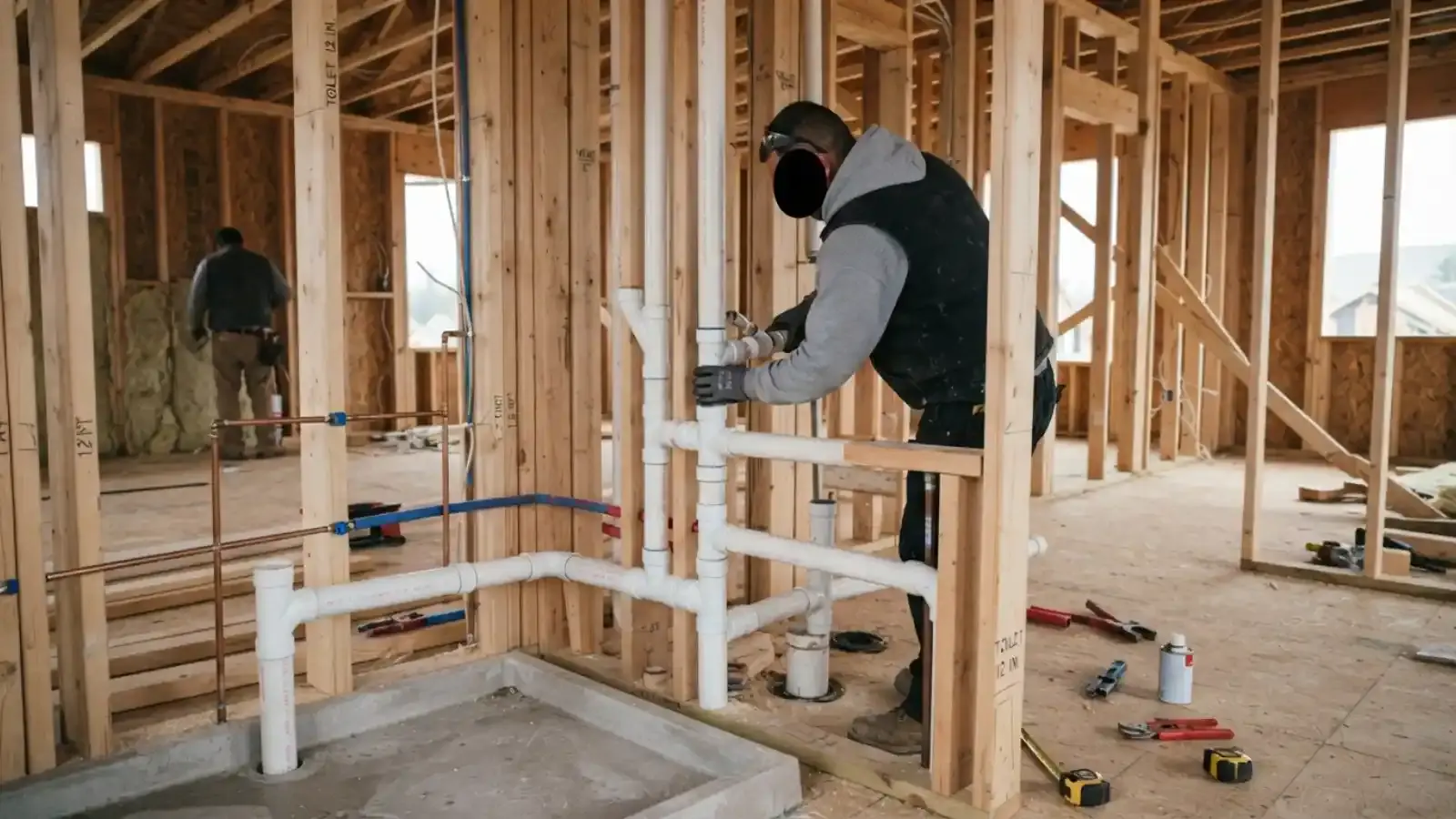
Plumbing installation in Coconut Creek, FL: what we install
Plumbing installation means putting new pipes and fixtures where none existed, or moving existing ones to a new spot. It covers supply lines that bring water in, drain lines that carry waste out and vents that let the system breathe.
In Coconut Creek that work usually comes from a remodel, a room addition, a new bathroom or a swapped kitchen layout. Planning matters more than speed here, because a drain that is a half inch too flat will cause slow flow for the life of the house.
Projects we install plumbing for
Most installation calls fall into a handful of project types. Each has different decisions to make before the first pipe is cut.
New bathroom or half bath
Toilet, sink, shower or tub with new drain, vent and supply lines tied into the nearest stack.
Kitchen remodel
Moving the sink, adding a pot filler, hooking up a dishwasher or a new garbage disposal.
Laundry room
Washer box, drain standpipe and a utility sink for a room that never had them.
Room addition or garage conversion
A new branch from the main lines, often with a slab or wall to cross.
Fixture upgrades
New faucets, toilets, shower valves and vanity plumbing that need clean connections.
Equipment hookups
Water softener, filter, ice maker and water heater connections with proper shutoffs.
Rough-in: the plumbing you never see again
Rough-in is the stage where pipes go into open walls, floors or the slab before drywall and finish work. Drain slopes, vent connections and valve locations are set here, and fixing a mistake later means cutting open a finished wall.
For new construction plumbing the rough-in is staged. Drains and vents go in first, supply lines follow, and everything is pressure tested before the walls close. If you are building a new bathroom, a clear layout before this stage saves the most money later. The finish stage sets the fixtures, tests every valve and checks for leaks under each sink and behind each toilet.
New lines versus reusing existing ones
When a remodel moves a fixture, you can often reuse a nearby line or run an entirely new branch. Here is how the two approaches compare.
Tie into existing lines
- Lower material cost and less demolition
- Works when the new fixture is close to the old one
- Depends on the age and capacity of the old pipe
- May bring old valves and fittings into a new room
Run new branch lines
- Sized for the new fixtures from the start
- Lets you move a fixture far from its old position
- More wall, floor or slab opening
- Higher labor and material cost up front
How an installation project runs
- 1
Plan the layout
We review your plans or sketch, locate the nearest water, drain and vent connections and flag any obstacles.
- 2
Rough in the lines
Drain, vent and supply pipe is installed, supported and pressure tested while walls are open.
- 3
Inspection and close-up
If your project needs an inspection, the work waits for it before the walls close.
- 4
Set fixtures and test
Fixtures are set, shutoffs and traps are checked and every connection is tested under pressure.
Permits and inspections
Permit rules vary by project and by address, so ask the Coconut Creek Building Department at 954-973-6750 before work begins. The city says permits are needed for alterations, replacements and new construction, and its permits cover plumbing along with structural, electrical and mechanical work.
The department is at the Coconut Creek Government Center, 4800 West Copans Road, and its online permit portal is linked from the city website. If your home is in Margate or Coral Springs, each city has its own building department with its own forms, so confirm with the one that covers your address.
Local points that shape a plumbing installation
A few local facts affect how we plan new plumbing here.
Which utility serves you
The City of Coconut Creek utility serves homes north of Coconut Creek Parkway and the City of Margate utility serves the area south of it. A new water line or a meter question goes to the utility that reads your meter.
Chloramine in the supply
The City of Coconut Creek reports chloramine as its disinfectant. For new installations we choose rubber seals, supply connectors and fill valves rated for it, because chloramine can wear softer rubber faster than free chlorine.
Digging near utilities
If a project involves digging outside, Sunshine 811 asks for at least two full business days of notice before you dig. Call 811 or request a locate online in advance so the schedule does not stall.
What affects the price of plumbing installation
Installation is priced to the project. These factors change the number the most.
Distance to existing lines
A fixture near an existing wall costs less than one across the house.
Wall, floor or slab access
Open framing is quick. Cutting through concrete is slower and costs more.
Fixture count and quality
More fixtures mean more connections, and some valves and fixtures take longer to set.
Pipe material
PEX, copper and PVC differ in cost and labor.
Permits and inspections
Projects that need an inspection add scheduling time and fees.
Insurance does not usually cover planned installations. Coverage is for sudden damage, so a remodel is normally paid out of pocket. If water damage is what started the project, ask your insurer before you tear anything out.
Have plans or a sketch? Call and we will talk through the price.
Call (855) 575-2890When a different service fits better
If the problem is an old line that keeps leaking, a repiping conversation is a better fit than adding new pipe to it. A slow main drain or backup is a drain job, not an installation. For a tank that has quit, our water heater installation page explains replacement work.
Plumbing installation questions from Coconut Creek homeowners
Yes. We install the toilet, sink, shower or tub along with drain, vent and supply lines, and test them before the walls close. A sketch or plan helps us size and route the pipe.
Permit rules vary, so ask the Coconut Creek Building Department at 954-973-6750. The city states that permits cover alterations and new construction, including plumbing. They can tell you what applies to your project.
Usually yes. The cost depends on how far the new spot is from existing lines and whether we cross a wall or floor to get there. We review the route with you before pricing it.
Yes. We install bypass valves, shutoffs and drain connections for softeners and filters. See our water softener and filtration page for guidance on how to tell if you need one.
Florida licenses plumbing contractors through the Department of Business and Professional Regulation. The city advises hiring licensed, insured contractors and verifying licenses with the state before work begins.
It depends on the size of the project. We outline the steps and the likely schedule when we give you the price, and we flag anything like inspections that could add time.