
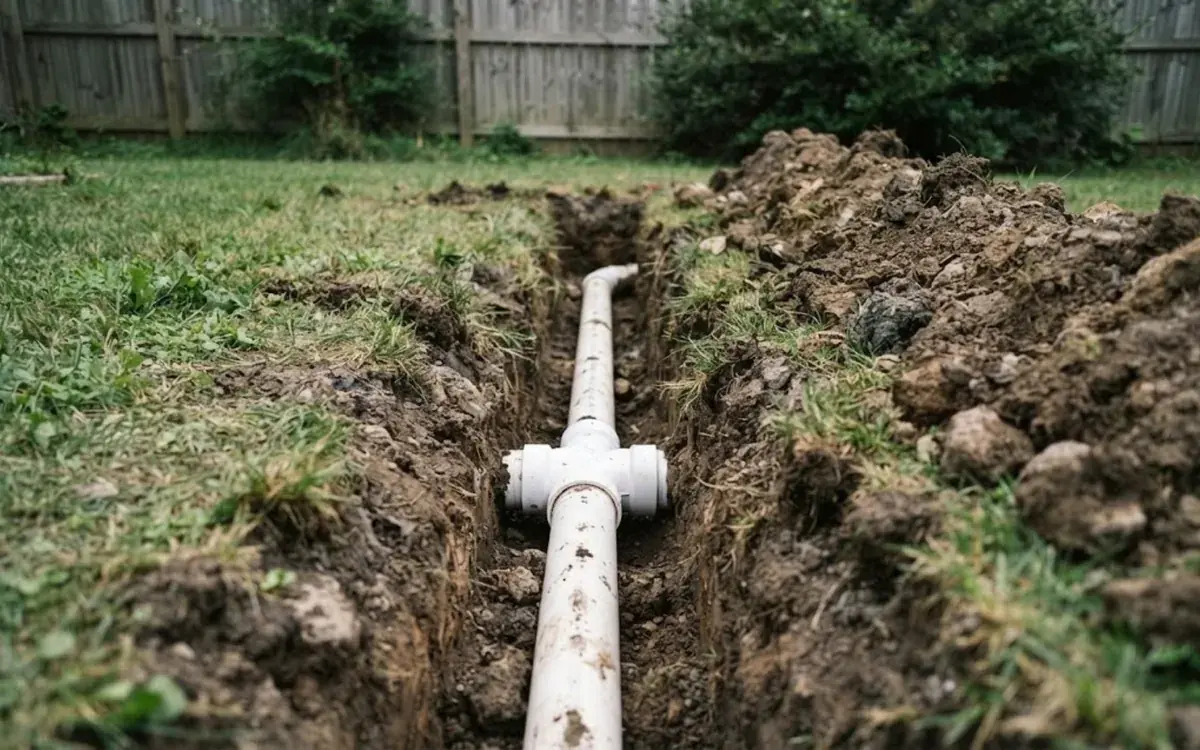
Emergency sewer line repair in Coconut Creek: when cleaning is not enough
A sewer line is the underground pipe that carries wastewater from your home to the public sewer, and sewer line repair means fixing a crack, break, offset joint or root-damaged section of it. For Coconut Creek, FL homes, emergency sewer line repair is the right call when a camera or a failed cleaning shows the pipe itself is broken.
Our line answers 24/7, and a technician can often reach you the same day, including nights and weekends. While you wait, stop using water and keep everyone out of any wet area. Backup first, repair second: we stabilize the line so you can use the house again, then show you the camera footage and the plan.
Sewer backup: what to do while we are on the way
Wastewater in the house is a health issue as well as a plumbing one. These steps protect your family and your floors.
Stop using every fixture
Do not flush, shower or run the washer. Each use sends more water into a line that is already blocked.
Keep everyone out of the wet area
Backed-up water can carry bacteria. Keep children and pets away and wear boots and gloves if you must go in.
Do not mix cleaners
Chemical drain products and bleach should stay out of a standing backup. They are hazardous together and they make the technician's job harder.
Photograph the damage
Take dated photos of affected floors, walls and belongings. Your insurer may ask for them.
If the blockage is the only problem and the pipe is sound, our sewer line cleaning service clears it without repair.
Signs the sewer line itself is damaged
A clog is a symptom. These patterns point to a pipe that has failed.
Backups that keep returning
Drains clear after cleaning and clog again within weeks, even when nothing unusual went down them.
Gurgling and slow drains throughout the house
More than one fixture is affected, and the lowest drain shows it first.
Sewage smell in the yard or garage
Odor outdoors near the line path can mean a break or an open joint.
A wet or sunken patch in the yard
Damp grass or a dip in the ground above the line suggests a leak or washed-out soil.
Cleaner that stops partway
A cable that hits a hard stop at the same spot every time may be catching a break or a bellied section.
Foundation or slab moisture
Water or soft ground near a slab edge can signal a drain leak beneath the floor.
Root intrusion
Tree roots look for water and oxygen, and a sewer joint offers both. A hairline gap lets in root hairs, which thicken into a mass that catches paper and waste.
Cutting the roots restores flow for a while, but the opening stays. Unless the joint is sealed or the pipe is lined or replaced, the roots return. If a cutter has cleared the line more than once, treat it as a repair problem, not a cleaning problem.
Spot repair, lining or replacement: how we choose
The camera and the pipe condition decide the repair, not the other way round. This is how the three main options compare.
| Option | Best for | Trade-off |
|---|---|---|
| Spot repair (dig and replace a section) | One cracked or offset joint on an otherwise sound pipe | Needs a trench at the damaged spot, but leaves most of the line alone |
| Trenchless pipe lining | Long runs with several cracks or root entry points | Reduces digging, but needs a pipe that is open enough to line and a camera to confirm |
| Full replacement | Collapsed, flattened or badly bellied pipe, or old pipe that is failing in many places | Most digging and cost, but a new line from end to end |
| Cleaning only | Sound pipe with a one-time blockage, see drain cleaning | Cheapest, but does not repair a crack or a root joint |
Trenchless pipe lining and epoxy lining
Pipe lining works by pulling a resin-soaked liner through the damaged pipe and curing it in place, creating a new pipe inside the old one. It reduces trenching in lawns, driveways and landscaping.
Lining is not magic. The pipe must be cleaned first, often with hydro jetting, and it must have a continuous route for the liner. A pipe with a full collapse or a deep belly may not qualify, and a camera tells us that before we recommend it. Some homeowners ask about lining a sewer line that runs under a concrete slab. It is possible in some cases, and the camera and a careful look at access points decide.
Collapsed or broken pipe repairs
Old clay, cast iron and thin-wall pipe can crack from age, ground movement or heavy loads above them. A localized crack with root entry is a typical spot repair candidate, since only that section needs to be exposed and replaced.
We mark the spot with a locator and dig a bell hole of the needed size, cut out the bad section and join in new pipe with proper fittings. After the repair, a camera pass proves the line is clean and sealed.
For drain pipe leaks inside the house, for example from a bathroom branch, see our burst pipe repair page for pressurized lines and the sections above for drain lines.
Septic systems and what we cover
Some properties around Broward County use septic tanks rather than the public sewer. We handle the plumbing side of those systems, such as a clogged line to the tank, a broken pipe or a failing connection.
We do not pump septic tanks or service drain fields as part of this service, and we tell you when a septic contractor is the right call. Not sure if your home is on septic or the public sewer? Your utility or the city can confirm which.
What shapes sewer line problems in Coconut Creek
These local conditions are worth knowing before any digging starts.
Older communities
City planning documents describe South Creek as more than 50 years old and Wynmoor as about 40 years old as of 2019. Lines from that era are more likely to have joint problems, so a camera look is smart before major work.
Call before you dig
Sunshine 811 asks you to notify at least two full business days before you dig, and that applies when a repair needs a trench. We plan the schedule around it so buried utilities are marked first.
City and County roles
The City of Coconut Creek maintains local sewer infrastructure and Broward County treats the wastewater. A problem on your own lateral is yours to repair, and one in the public main is for the utility.
Heavy rain
The Atlantic hurricane season runs from June 1 to November 30. Soil that stays soaked can shift and stress a weak line, so schedule a camera check if backups started after a wet stretch.
What a sewer line repair visit involves
- 1
Camera the line
We scope the pipe from the cleanout, record the footage and locate any damage.
- 2
Explain the options
You see the footage and hear the repair choices, including the cost in digging for each.
- 3
Repair
We repair or line the pipe after you approve the plan and after buried utilities are marked.
- 4
Verify
A final camera pass and a flow test show the line is clear and sound.
What affects the price of sewer line repair
No honest price can be given before the camera. These factors set the number.
Length of damage
A single cracked joint is a smaller job than twenty feet of failed pipe.
Depth of the pipe
A deeper line means a bigger excavation and more shoring.
What is above it
A lawn is easier to restore than a driveway, a patio or a slab.
Repair method
A spot repair, lining and a full replacement are priced very differently.
Emergency timing
After-hours work is priced differently from a booked day visit, and you hear the number first.
Homeowner insurance usually does not pay to replace a failed sewer line from age or root damage. Some policies add sewer backup coverage for the damage a backup causes, so ask your insurer what yours includes.
Want your real number once the camera shows the pipe? Call us.
Call (855) 575-2890Sewer line repair questions from Coconut Creek homeowners
Yes. Our line is open 24/7 and a technician can come out on nights, weekends and holidays. We stabilize the backup first and then schedule the camera and repair.
A camera is the only certain way. Warning signs are repeat backups, a cable that stops at the same spot and a wet or sunken patch of yard. Cleaning that fails twice is a good reason to scope the line.
Often yes. A spot repair needs a small trench at the damage, and trenchless lining reduces digging along the whole run. Whether either applies depends on what the camera shows.
Usually yes, when the rest of the pipe is sound. We expose the cracked section, replace it and then clear the roots. If the camera shows more cracks, lining or replacement may make more sense.
In some cases it can, because lining does not need a trench along the line. The pipe has to be clear and continuous, and a camera and access points decide it. We tell you honestly if it will not work.
We repair the plumbing that connects to a septic tank, such as a broken pipe or a clogged line. We do not pump tanks or service drain fields, and we say so if that is what you need.
Yes. We dispatch from Coconut Creek to Deerfield Beach and Coral Springs as well as nearby towns. Give us the address when you call and we confirm coverage.