
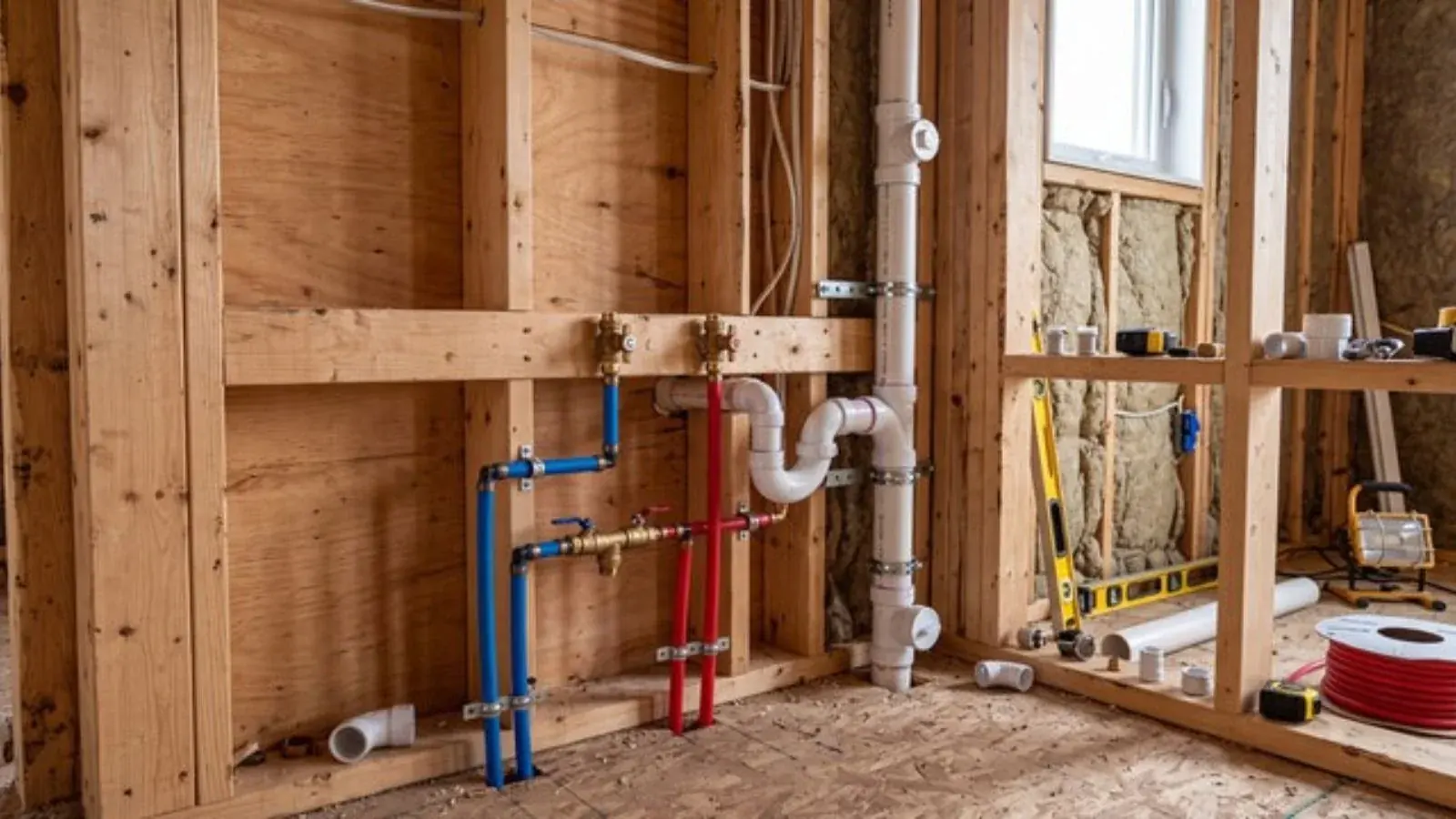
Repiping in Coconut Creek, FL: what it means and when it pays off
Repiping is the replacement of a home's water supply lines, the pipes that carry pressurized water to every sink, shower, toilet and appliance. Drain and sewer pipes are a separate system and are not part of a repipe.
For most Coconut Creek homeowners the decision starts the same way: a second or third leak in a short time. One pinhole is a repair. A pattern of them usually means the whole run of pipe has reached the end of its life.
Why homeowners start asking about a repipe
Callers rarely say repipe first. They describe what the water or the walls are doing, and these are the patterns that most often lead to a repipe conversation.
Pinhole leaks that keep coming back
A tiny spray in a copper line or a green crust at a joint, repaired once, then another one a few feet away a few months later.
Rusty or brown water
Water that runs orange or brown when you first open a tap, especially after the house has been empty for a few days, can mean corroding steel lines.
Low pressure at every fixture
If pressure is weak throughout the house and the utility side checks out, scale and corrosion inside old pipe can be choking the flow.
Stained ceilings and damp walls
Repeated stains with no roof leak to blame often trace to a failing supply line inside the wall.
A rising water bill
Slow seepage inside a wall can add up on the meter long before a stain appears.
Repeated repair visits
When the plumber keeps finding a different weak spot, the pipe itself is the problem.
Galvanized, copper and older lines: what we look for first
Galvanized steel pipe rusts from the inside out. The channel narrows, pressure drops and flakes of rust show up in aerators. Replacing galvanized lines is one of the most common reasons homes get repiped.
Copper lasts a long time, but pinholes can still form where water chemistry or velocity wears the wall thin. Before we recommend anything, we check pressure, look at fittings and open an inspection point if needed, so the advice comes from the pipe and not a guess.
Age matters because it points to likely materials. City planning documents describe South Creek as more than 50 years old and Wynmoor as about 40 years old as of 2019. A home from either era may still have its original supply lines, so a pressure test and a look at the pipe at the water heater and main shutoff are a smart first step.
Copper, PEX and CPVC compared
There is no single best pipe. The right one depends on the layout of your house, your budget and how much wall has to be opened.
| Material | Strengths | Trade-offs |
|---|---|---|
| Copper | Long track record, rigid, handles heat well, does not break down in sunlight | More joints to solder, higher material cost, can pinhole in aggressive water |
| PEX | Flexible, fewer fittings, easier to route through finished walls | Cannot be exposed to direct sunlight, needs proper support and crimp or expansion fittings |
| CPVC | Rigid plastic, lower cost, does not rust | Can turn brittle with age and heat, needs careful handling at joints |
Ask us which material suits your layout. We explain the pros and cons before you approve a price.
Partial repipe or whole-house repipe
A partial repipe replaces one failing zone, such as the lines feeding a bathroom group or the run under a kitchen. It makes sense when the rest of the house tests well and the problem is clearly confined.
A whole-house repipe replaces everything from the main shutoff to each fixture. It costs more at the start but ends the cycle of repeat leaks and lets us fix valves, stops and old fittings in one pass. If pinholes have appeared in more than one part of the house, the whole-house route usually costs less than chasing leaks one at a time.
How a repipe job runs
Repiping sounds disruptive, and it is more organized than most people expect. We plan the work so you know which walls open and when water goes off.
- 1
Inspect and plan
We test pressure, trace the existing lines and map where new pipe can run with the least demolition.
- 2
Protect and open access
Floors and furniture are covered, then small access openings are cut only where needed.
- 3
Install and test
New lines go in, the system is pressure tested and each fixture is reconnected before water is turned back on.
- 4
Patch and close
Access holes are patched to a paint-ready finish so you are not left with open drywall.
Walls, patching and how long the water is off
Most repipes need small access openings rather than full wall demolition, especially with flexible PEX. Where we cut, we patch back to a paint-ready surface. Painting the patch is up to you or a painter of your choice.
We do not promise a fixed number of hours of shutoff because every house is different. Instead we plan the sequence with you before work starts, so water is restored to the main areas as early as the job allows and you know in advance when the water will be off.
What our local conditions mean for a repipe
A few local facts change how we plan the work.
Two utilities, one city
The City of Coconut Creek utility serves homes north of Coconut Creek Parkway and the City of Margate utility serves the area south of it. Check which one reads your meter so you call the right office about pressure on the street side of the meter.
Chloramine in the water
The City of Coconut Creek reports chloramine as its disinfectant. Chloramine can wear rubber seals and flappers faster than free chlorine, which is one more reason to replace old stops and washers during a repipe.
Storm season
The Atlantic hurricane season runs from June 1 to November 30. If a repipe is planned, scheduling it outside storm season and confirming the main shutoff works makes the work smoother.
What affects the price of a repipe
A repipe is priced to the house. These are the factors that move the number most.
Size and layout
The number of bathrooms, fixtures and floors sets how much pipe goes in.
Pipe material
Copper, PEX and CPVC differ in material cost and labor time.
Access
Open attic space is faster than runs inside finished walls or under a slab.
Whole house or zone
A single zone costs less up front than a full repipe.
Wall patching
More access openings means more patch work after the pipe is in.
Homeowner insurance usually pays for sudden water damage, such as a burst pipe, but does not usually pay to replace old pipe that is simply worn out. Check your policy, and ask your insurer before you file anything.
Want a price for your house? Call and tell us where the leaks are.
Call (855) 575-2890When a repipe is not the answer
Not every leak needs new pipe. A single failed fitting, a bad shutoff valve or a leaking water heater connection is a repair, and replacing everything for one fault would be wasteful. If the leak is under the floor, a slab leak repair may fix it by rerouting one line.
If you are unsure where the leak is, a visit from our leak detection crew finds it before you commit to anything larger. A leak in the line from the meter to the house is a water line repair job and not a repipe.
Serving homes beyond Coconut Creek
We repipe homes in nearby towns too, including Margate, where the city has a five-year water line replacement program in its own utility system. Public pipe work on the street does not replace the lines inside your house, so older homes can still need a repipe even after the street side is upgraded.
Repiping questions from Coconut Creek homeowners
One isolated leak on otherwise healthy pipe is usually a repair. Repeated pinholes, rusty water or low pressure throughout the house point to a repipe. We test pressure and inspect the pipe before we recommend either.
It can be. Rust-colored water on first use can come from corroding steel lines, and it can also come from a water heater tank or a utility flush. We check the lines and the heater so you know which one it is.
We cut small access openings where pipe has to pass and patch them to a paint-ready finish. PEX often needs fewer openings than rigid pipe. We walk the house with you before the work starts.
We plan the sequence with you before the job so you know when the water goes off and how we restore it room by room. Because every house is different we do not quote a fixed number of hours.
PEX is widely used for home supply lines. We choose approved pipe and fittings and install them to the manufacturer's instructions. Ask us about the material before you approve the work.
Permit rules vary, so ask the Coconut Creek Building Department at 954-973-6750. The city says permits are needed for alterations and replacements, and the department can tell you what applies to your address.
Policies differ. Many cover sudden water damage but not replacement of worn pipe. Call your insurer and ask before you start, and keep photos and notes from any leak.