
Emergency leak detection in Coconut Creek: what it is and when to call
Leak detection is the process of locating a water leak you cannot see, using meter tests, listening equipment and thermal imaging instead of demolition. For Coconut Creek, FL homes and businesses, emergency leak detection matters most when water is already damaging drywall, flooring or cabinets.
Our line answers 24/7, and same-day leak detection appointments are available when the schedule allows. If the leak is active and you cannot find the shutoff, treat it as an emergency and call right away.
When a hidden leak is an emergency
Water you cannot see can still do real damage within hours. While you wait for a technician, these four steps limit the loss.
Shut off the main valve
Turn the main shutoff at the house or at the meter box to stop the flow. If the valve will not turn or still leaks, tell us when you call.
Stop using water
Do not run taps, flush toilets or start the washer until the line is located. Every flush adds to the leak.
Protect electrical areas
If water is near outlets, a panel or ceiling lights, switch off power to that area at the breaker only if the floor around the panel is dry. Otherwise stay out and tell us.
Photograph and move valuables
Take photos of stains, wet floors and the meter face for your insurer, then move rugs, boxes and electronics out of the wet zone.
If water is pouring from a ceiling or the leak is tied to a burst pipe, our burst pipe repair crew handles the repair once the line is located.
Signs of a hidden leak, in the words homeowners use
Most leak calls start with a symptom, not the word leak. These are the ones we hear most, and each has a different place to start looking.
The meter keeps moving
Everything inside is off and the meter dial or low-flow triangle is still turning.
The water bill jumped
Usage rose with no new guests, no pool fill and no change in habits.
A warm spot on the floor
A section of tile or slab feels warm underfoot, which can point to a hot line leaking below.
A stain on a ceiling or wall
A brown ring, bubbling paint or soft drywall means water is collecting behind the surface.
The sound of running water
You hear a faint hiss or trickle at night when the house is quiet.
Low water pressure
Showers weaken and faucets sputter even though the utility is fine.
A musty smell or damp baseboard
Moisture trapped behind cabinets or under flooring often smells before it shows.
Wet ground near the house
A soggy strip of lawn or a damp meter box when it has not rained.
Meter still running or a high water bill
The cheapest first test costs nothing. Turn off every tap, the ice maker and the irrigation timer, then watch your water meter for two minutes. A moving dial or a spinning low-flow indicator means water is leaving the system somewhere.
Next, split the house in two. Close the main shutoff valve at the home and look at the meter again. If the meter stops, the leak is inside the house. If it keeps running, the leak is in the line between the meter and the house, which is a job for water line repair.
Which utility reads that meter depends on where you live. The City of Coconut Creek utility serves homes north of Coconut Creek Parkway, and the City of Margate utility serves the area south of it. Your utility handles bill questions and meter checks, and we locate and repair the leak on your side of the meter.
How we find a leak without opening the wall
No single tool finds every leak. A technician picks the method that matches the symptom, then confirms the spot with a second method before anything is cut.
| Method | Best for | Limits |
|---|---|---|
| Meter and pressure test | Confirming a leak exists and whether it is inside or outside the house | Does not show where the leak is |
| Acoustic listening | Pressurized supply lines under floors and in yards | Road noise and loud appliances can mask the sound |
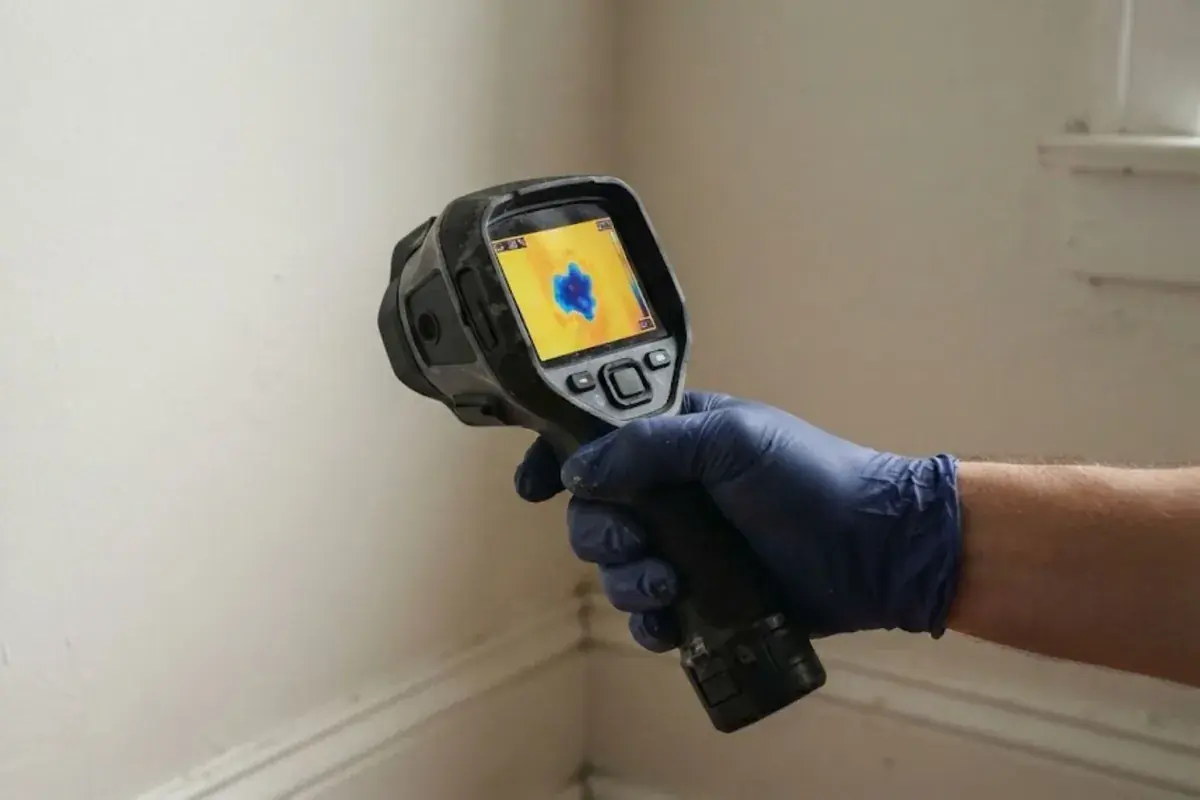
| Thermal imaging | Hot water lines, wet insulation and ceiling leaks | Shows temperature differences, so a second method confirms it |
| Moisture meter | Mapping how far water has spread in drywall and wood | Surface readings only, not the pipe itself |
| Camera inspection | Drain and sewer leaks, see sewer camera inspection | Only reaches pipe a camera can travel through |
Ceiling, wall and attic leaks
A brown stain on a ceiling is usually not where the leak starts. Water travels along joists and pipe runs before it shows, so the stain can sit several feet from the source.
We trace the stain back with moisture mapping and thermal imaging, then check the likely sources above it: a bathroom supply, an air handler drain pan, a water heater line or a roof penetration. If the water is clear and constant it is usually a pressurized pipe, and if it appears only after rain it is usually the roof.
Plumbing leaks are our side of the job. If the trail ends at the roof, we tell you so you do not pay for plumbing work that will not fix it.
Under-house, slab and buried line leaks
Homes built on a concrete slab often have supply and drain lines running under the floor instead of in an open crawlspace. A leak there shows up as a warm floor spot, a wet baseboard or a meter that never stops. When listening and thermal checks point under the concrete, the next step is a slab leak repair plan.
A buried line leak between the meter and the house behaves differently. The yard stays wet, pressure drops, and the meter runs even with the house closed off. We trace the line, mark the spot and give you the repair options before any digging starts.
Irrigation, yard and pool leaks
Broward County restricts sprinkler days year-round, so a lawn that looks soaked on a non-watering day is worth checking. A broken irrigation valve or a cracked line near a meter box can waste a lot of water without any sign inside the house.
If you have a pool or spa, a pressure test of the fill and return lines can separate a plumbing leak from normal evaporation. We focus on the plumbing side, and a pool equipment specialist handles the shell and the pump.
Why leaks show up the way they do in Coconut Creek
Local conditions change where we look first. These are the ones that come up on service calls here.
Older communities
City planning documents describe South Creek as more than 50 years old and Wynmoor as about 40 years old as of 2019. Homes that age can have worn supply lines, so a pinhole leak is a real possibility and a pressure test is a smart first step.
Two utilities, one city
The line between Coconut Creek and Margate utility service runs along Coconut Creek Parkway, so the first call about a bill or a meter should go to the right one. Save yourself the wasted call by checking which utility sends your bill.
Storm season
The Atlantic hurricane season runs from June 1 to November 30. After a storm, check the meter and look for wet ceilings, since high winds and flying debris can crack lines and open roof penetrations.
Irrigation rules
Sprinklers may run only before 10 a.m. or after 4 p.m. and never on Monday, Tuesday or Friday. Wet lawn at other times often means a stuck valve or a leak.
Commercial and multi-unit properties
Property managers and landlords call for the same reason homeowners do, plus a few more: tenants reporting a stain, a vacant unit with a running meter or a restaurant grease line that smells. We document where the leak is and where it is not, which helps when you have to decide between a plumbing repair and an insurance claim. Bigger sites with multiple meters are covered on our commercial plumbing page.
What a leak detection visit looks like
- 1
Describe the symptom
You tell us what you see. We ask about the meter, the bill and when it started.
- 2
Test and listen
The technician runs meter and pressure tests, then listens and scans with thermal imaging.
- 3
Pinpoint and explain
The leak is marked with its depth and cause, and you hear the repair options with a clear price.
- 4
Repair or hand off
If you approve, the repair is done the same visit when possible. If it is a roof or utility issue we tell you who to call.
What affects the cost of leak detection
Leak detection is priced by how hard the leak is to reach, not by a flat guess. Here is what moves the number.
Access
A leak under open floor is faster to confirm than one under tile and a layer of slab.
Number of suspects
One wet wall is quicker than a meter that runs with no visible symptom.
Method needed
Meter and listening tests take less time than a full thermal and camera survey.
Property size
A townhome and a multi-building property are different jobs.
Repair that follows
Finding the leak and fixing it are priced separately, so you can compare.
Most homeowner policies cover sudden water damage, such as a burst pipe, and may not cover slow leaks or the cost of locating the leak itself. Ask your insurer what applies to your policy before you file.
Want your real number? Call and describe the symptom.
Call (855) 575-2890What to have ready before we arrive
A few minutes of preparation helps the visit go faster and gives your insurer what it needs.
- The location of your main water shutoff and your water meter.
- Photos of any stain or wet area with a date, and a photo of the meter reading.
- A recent water bill so we can compare usage.
- Notes on when you first noticed the sound, smell or stain.
- The name of your utility if you are not sure which side of Coconut Creek Parkway you are on.
Leak detection questions from Coconut Creek homeowners
Yes. Our line is open 24/7 and we dispatch emergency leak detection across Coconut Creek, including nights, weekends and holidays. Shut off the main valve while you wait if you can, and describe what the water is doing when you call.
Close the main shutoff valve at the home and watch the meter for a few minutes. If the meter stops, the leak is inside. If it keeps moving, the leak is in the line between the meter and the house, and we can trace it.
Not to find it. We use meter tests, listening gear and thermal imaging to locate the leak first. An opening is made only at the confirmed spot, and we explain why before we do it.
Do the two-minute meter test with every fixture off. A moving meter confirms a leak somewhere. Toilets are the most common hidden source, so also try a few drops of food coloring in the tank and wait without flushing to see if color appears in the bowl.
Often yes. A moving meter with no wet yard, plus a warm spot or a sound under the floor, points under the concrete. We confirm with listening gear and then walk you through the slab leak repair options.
Yes. We document where the leak is and where it is not, which helps with tenant disputes and insurance questions. Call from the property and tell us how many units or meters are involved.
Florida licenses plumbing contractors through the Department of Business and Professional Regulation. You can search by name or license number on the state site using its Verify a Licensee tool before you approve any work.
Yes. We dispatch from Coconut Creek to nearby towns, including Margate just south of the Parkway. Tell us the address and we confirm coverage when you call.