
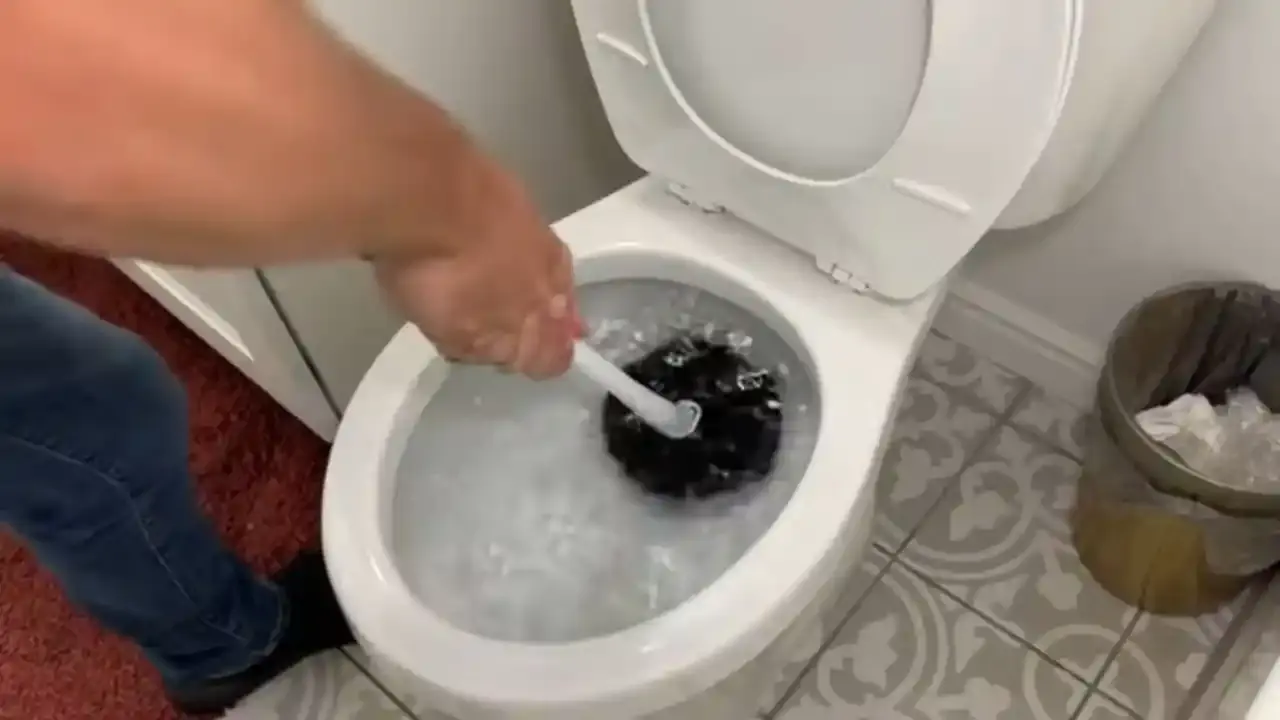
Start with the right plunger and a calm first step
A clogged toilet is a blockage in the trap built into the base of the bowl, or in the short drain just past it. Water and waste cannot pass, so the bowl fills and either holds or creeps toward the rim. The fix for most households is mechanical pressure, not chemicals.
Before anything else, lift the lid of the tank and push the flapper down to stop more water entering the bowl. If the level is already near the rim, wait ten minutes. Often the level drops on its own and gives you room to work without a spill.
Put towels on the floor and wear rubber gloves. Keep the bathroom door closed if pets or children are around, because dirty water on tile is the one part of this job nobody enjoys.
Which plunger actually works on a toilet
Two plungers are sold side by side in most stores, and only one of them seals properly in a toilet bowl.
Cup plunger (sink style)
- Flat rubber cup, designed for flat surfaces like a sink or tub.
- Does not seat in the toilet outlet, so pressure leaks past the edge.
- Fine for a shower or sink, weak on a toilet.
Flange plunger (toilet style)
- Has a rubber sleeve below the cup that fits into the drain opening.
- Seals the outlet so each push drives water and pressure into the clog.
- The right first tool for nearly every bowl clog.
Water rising and nothing is working?
Our line answers 24/7. Tell us what the toilet and the other drains are doing.
The plunging method, in order
Plunge slowly at first, because a hard first push can splash water out of the bowl. Then work faster once a seal forms.
- 1
Cover the outlet
Add water if needed so the cup is fully under water, then seat the flange in the outlet.
- 2
Push gently, pull hard
The pull stroke does much of the work. Do ten to fifteen steady strokes without breaking the seal.
- 3
Check the swirl
If the water drains with a gurgle and a swirl, flush once to confirm. If it stays high, repeat the cycle.
- 4
Stop after three rounds
Three honest attempts with no movement means the clog sits too far in, so move to the next tool.
Hot water and dish soap for soft clogs
When the clog is mostly paper and waste, hot water and dish soap soften it and add lubricant. Squirt a generous amount of dish soap into the bowl, then pour a bucket of hot tap water from waist height. Do not use boiling water, because sudden heat can crack the porcelain.
Wait twenty minutes and plunge again. This combination is the reason many stubborn clogs give up on the second try. It will not touch a toy, a wipe or a hard object, but it costs almost nothing and is safe for the bowl and the pipes.
A closet auger reaches what a plunger cannot
A closet auger is a short cable with a curved guide that protects the porcelain. Feed the tip into the outlet, crank the handle clockwise and push gently until you meet resistance. Keep cranking to hook or break up the clog, then pull the cable out slowly.
Do not use a long drain snake from a hardware aisle in a toilet. Its bare metal tip can scratch the bowl, and it is hard to steer through the built-in trap. Wipe the auger down before you put it away.
If you retrieve a child toy, a wipe or a clump of cleaning cloth, you have found the cause. Flush wipes labeled flushable are a frequent culprit, and a plumber can show you the same thing on a camera when it keeps happening.
Clog clues and what they usually mean
The way the water behaves tells you where the clog sits.
| What you notice | Likely location | First move |
|---|---|---|
| Bowl fills slowly and drains slowly | Partial clog in the toilet trap | Hot water, dish soap, then plunge |
| Bowl fills fast and will not drain | Solid blockage in the trap or outlet | Flange plunger, then closet auger |
| Bubbles or gurgles in a nearby sink or tub | Blockage beyond the toilet, in the branch line | Stop flushing, call a plumber |
| Every drain in the house is slow | Main line stoppage | Stop using water, call right away |
| Toilet runs or keeps refilling after clearing | Flapper or fill valve problem | See toilet repair and installation |
When the clog is a main line problem
One toilet that will not drain is a fixture problem. A toilet that gurgles when the shower runs, or a floor drain that bubbles when you flush, is telling you the shared line is partly blocked. Plunging will not fix that, and it can push waste back through the lowest fixture in the house.
At that point stop using water and call. A plumber can run a cable or high-pressure water through the line and then put a camera in to see whether roots, a belly or a collapsed section caused it. Our crews handle that work under drain cleaning, and repeat problems often point to a defect covered by sewer line repair.
Coconut Creek note: storm season and backed-up drains
The Atlantic hurricane season runs from June 1 to November 30, according to the National Hurricane Center. That window overlaps the months when heavy rain and power loss are most likely, and both can leave a household with a slow toilet and no way to run a pump or fan to dry out.
The National Weather Service recorded sustained winds of 76 mph in Broward County during Hurricane Irma in 2017, with gusts mostly between 80 and 100 mph. Storm debris and saturated ground are common reasons a line that worked before the storm starts to back up afterward. The practical step is to test every toilet and drain a day or two after a storm instead of waiting for a problem during the next heavy rain.
Source: National Hurricane Center climatology page and National Weather Service Miami summary of Hurricane Irma.
Safety and cleanup checklist
A few precautions keep a simple clog from turning into a larger mess.
- Never mix drain cleaners. Combinations of chemical products can release dangerous fumes.
- Skip caustic drain cleaners in a toilet. They can sit in the bowl, splash back and damage the fixture, and a plumber then has to work around the chemicals.
- If the floor is wet near outlets or an appliance, keep electricity away and clean up before anything else.
- Wash your hands and tools in hot water with soap after the job. Disinfect the floor and the handle of the plunger.
- If the water is coming up in the tub or shower while you plunge, stop and call us on the 24/7 line.
What a plumber does when your tools do not work
We start with a hand auger and a flange plunger, since a clog in the fixture itself is the most common call. If those fail, a camera shows whether something solid is lodged in the trap or the line further back. When the toilet must be removed, we pull it, clear the outlet from below and reset it on a new wax ring.
That last step matters. A toilet that is pulled and set back with the old seal can leak at the base, so the new ring or seal is part of the visit. Neighbors in Margate and Coral Springs call us for the same reason, and the steps do not change from one town to the next.
Toilet clog questions from Coconut Creek homeowners
Yes, in order. Plunge first, then use a closet auger if the water stays high. Avoid a long bare-tip snake in a toilet, because it can scratch the porcelain and is awkward to steer through the trap.
No. Boiling water can crack porcelain and soften the wax seal under the bowl. Use hot tap water instead, with dish soap, and let it sit for twenty minutes.
Common causes are low-flow bowls that need more paper control, wipes labeled flushable, a partial blockage in the line, or a vent that is not letting air in. A camera inspection tells you which of these applies.
Look at the other drains. If a tub or sink gurgles when the toilet flushes, or several fixtures run slow at once, the blockage is shared by all of them and plunging will not help.
We advise against it. Chemicals sit in standing water, can damage the finish and are hazardous to a plumber who later works on the fixture. Mechanical tools are safer and work better.
Flush each toilet and run each tub and sink a day or two after heavy rain or wind. If any fixture drains slowly while others are normal, the line may have taken debris or the ground may have shifted, and a camera check is worth booking before the next storm.