
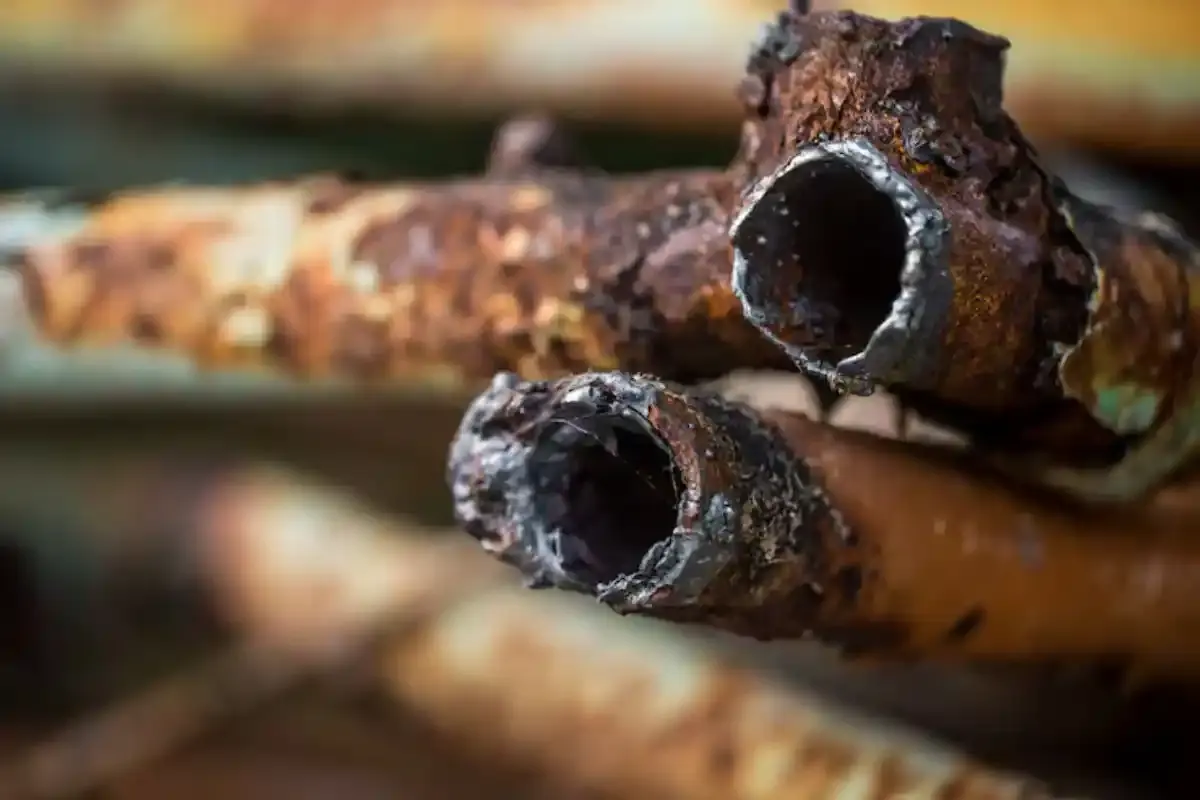
Most leaks come from a handful of causes
A plumbing leak is water escaping from a pipe, joint, valve or fitting that was meant to hold it. The escape point is easy to see once water stains a ceiling. The reason it happened is harder to read, and it matters, because the same repair on the same cause will fail again.
Below are the causes we see most, grouped by where in the house they tend to show up. Use them to match what you are seeing to a likely explanation before you call.
Common causes and where they show up
Start with the symptom, then read across to the likely cause.
| Where you see it | Likely cause | Typical fix |
|---|---|---|
| Drip at a faucet or under a sink | Worn washer, cartridge or supply connection | Replace the part or the supply line |
| Wet floor around a toilet | Failed wax ring or tank seal | Reset the toilet with a new seal |
| Stain on a ceiling below a bathroom | Drain joint or shower pan leak | Repair the joint or the pan |
| Pinhole spray from a pipe | Corrosion from the inside or outside | Replace the section, or repipe if widespread |
| Water pooling around the water heater | Tank failure or loose fitting | Tighten a fitting or replace the heater |
| Wet yard with no rain | Failed water line or sewer break | Locate and repair the buried line |
Water where it should not be?
Call the 24/7 line. We find the source, explain the cause and give you a clear price before work starts.
Wear and tear on seals, washers and flappers
Rubber and plastic parts harden, crack and lose their grip over the years. Faucet washers, toilet flappers, supply line gaskets and the seals inside shutoff valves are the usual first casualties. They are cheap parts, and a slow drip from one often goes unnoticed for months.
Replacing the part is normally a short visit. If the same fixture leaks again soon after, the cause may be pressure or water chemistry, not the part you changed.
Causes hiding inside the pipes
These are harder to spot because the damage starts where you cannot see it.
Corrosion
Metal pipes thin from the inside until a pinhole opens. Green crust, rust streaks or discolored water are early hints.
High water pressure
Pressure above what fittings are built for strains joints, valves and appliance hoses until one gives.
Hammering and vibration
A pipe that bangs when a valve closes fatigues its joints and the straps that hold it.
Bad joints
A poorly soldered, glued or compressed joint can hold for years and then weep.
Temperature swings
Hot lines expand and contract. Over time that movement loosens fittings and wears through contact points.
Clogs that back up
A blocked drain pushes water out of loose joints and onto cabinets and floors.
Pressure, hammering and a pressure regulator that has failed
Many homes have a pressure regulator near the main shutoff. When it wears out, pressure at every fixture climbs, and the weakest part of the house starts to leak first. That is often a water heater connection, a washing machine hose or a toilet fill valve.
If leaks keep appearing in different rooms, a single pressure problem is a better suspect than bad luck. A gauge on a hose bib takes a reading in seconds, and our plumbing installation team can replace a failed regulator.
Leak you can see or leak you cannot
The cause is the same family, but the response is different.
Visible leaks
- Drips at faucets, toilets and supply lines.
- Water at the base of the water heater.
- Stains that grow after each use of a fixture.
- Usually a part replacement.
Hidden leaks
- A water meter that moves with everything off.
- Warm patches on a floor or a hissing sound.
- A musty smell with no visible source.
- Often need location work before any repair.
Water treatment and your pipes in Coconut Creek
The City of Coconut Creek buys its water wholesale from Broward County. It comes from Biscayne Aquifer wells, treated at the County plant in Pompano Beach with softening, filtration, disinfection and fluoride. The disinfectant is chloramine, not free chlorine.
Chloramine can age rubber parts such as flappers and seals faster than some homeowners expect, which is one reason a toilet flapper may need replacing sooner than the packaging suggests. If you want to know how hard your water is, the utility publishes an annual water quality report, so ask for it instead of guessing. Homes south of Coconut Creek Parkway are served by the City of Margate utility, so check which one sends your bill.
Source: the City of Coconut Creek water quality page and the Broward County water treatment information (municipal and county utility pages).
Soil movement, roots and outdoor lines
Underground pipes sit in soil that shifts as it dries, floods and settles. A buried line can crack, pull apart at a joint or be pierced by roots looking for water. Heavy rain and ground saturation add weight and movement, and a line that has been sound for years can start to leak after a wet season.
Outdoor leaks show up as soft ground, green patches or a drop in pressure. Our water line repair team locates and replaces the damaged section, and our sewer line repair crews handle the drain side. Neighbors in Margate and Coral Springs ask about the same problems.
Reduce the chance of a leak
These habits cannot rule out a leak. They do lower the odds.
- Replace old washing machine and supply hoses before they split.
- Test your water pressure once a year with a simple gauge.
- Know where your main shutoff is and turn it each year so it does not seize.
- Look under sinks and around the water heater every month.
- Fix slow drips early, since they signal a part nearing the end of its life.
When to stop and call a plumber
A dripping faucet or a loose supply line may be a DIY fix if you are comfortable with it. Anything involving the main line, a water heater, gas or a slab is a job for a licensed plumber.
If you hear running water with every tap closed or find a wet spot you cannot trace, shut off the main and call. Our leak detection team can locate the source without opening walls first.
Plumbing leak causes: common questions
Worn seals, washers and supply connections are the most common. They are inexpensive parts that fail slowly and are usually quick to replace.
Yes. Pressure above what fittings and hoses are made for strains them until one leaks. If leaks appear in different rooms, check the pressure first.
The cause may be pressure, a poor connection or the age of the surrounding pipe, not the part you replaced. A plumber can look at the whole run, not only the drip.
Buried lines can, because saturated soil moves and presses on joints. If a yard stays wet after the rain stops, test the meter with everything off.
One pinhole in an old pipe may be fixed by replacing that section. Several pinholes in different areas suggest the whole pipe is wearing out, and a repipe may make more sense.
The city uses chloramine as its disinfectant, which can age rubber parts like toilet flappers. That is a wear issue for small parts, not a reason to expect pipe failures. Ask the utility for its water quality report if you have concerns.